Exhibition
Future Past Tense
Saturday, September 12
12:00 AM - Oct 30, 11:59 PM
PATRICIA SWEETOW GALLERY
Los Angeles, United States
Checking payment status…
Registration
Registration for this event is managed on an external website.
RSVPAbout event
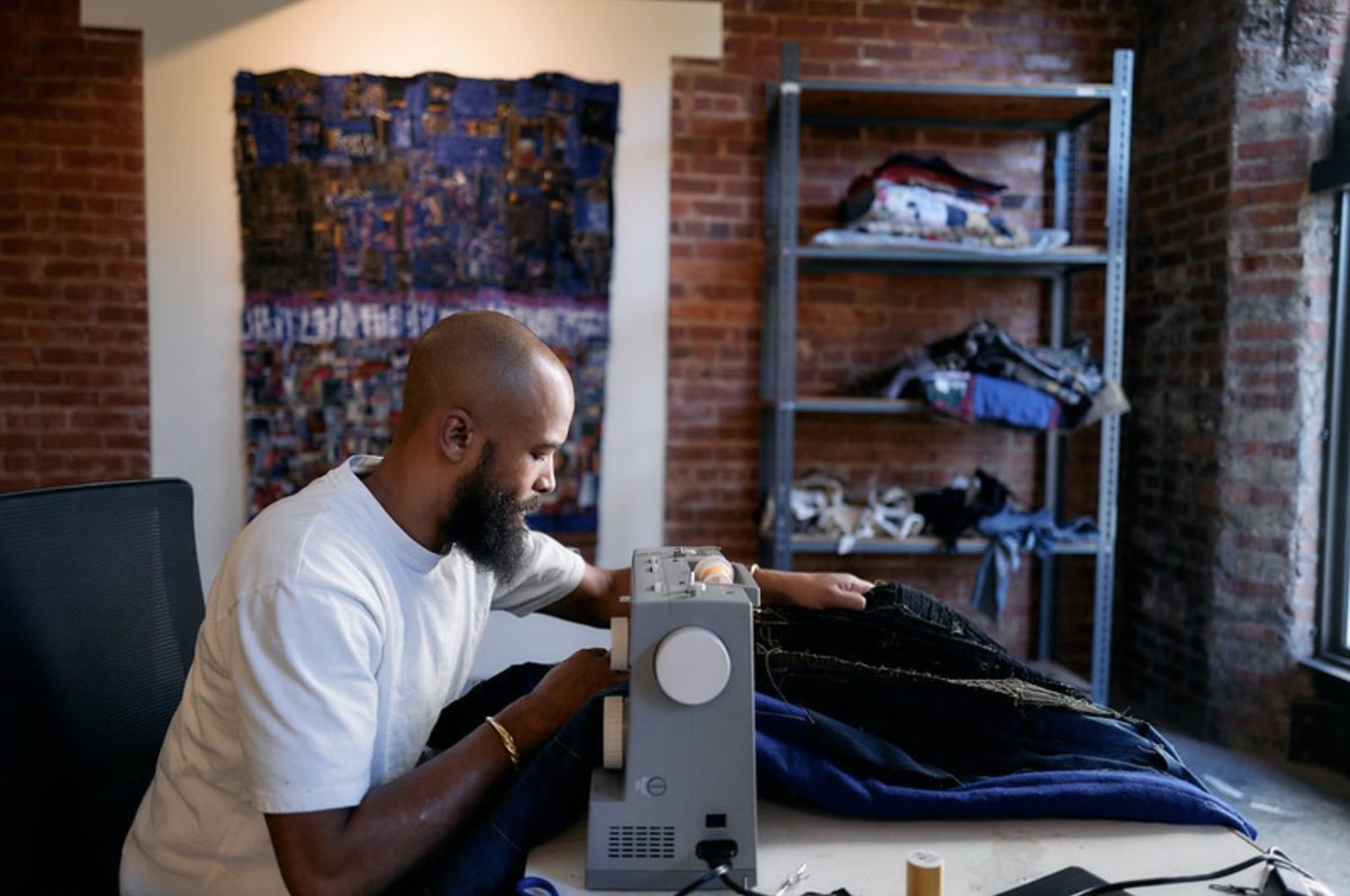
Future Past Tense features five artists whose work mirrors historical and private chronicles to unmask past/future intersectionality. About PATRICIA SWEETOW GALLERY is pleased to present Future Past Tense with Esperanza Cortés (New York), Cheryl Derricotte (San Francisco), Karen Hampton (New Mexico), Asa Jackson (North Carolina) and Fay Ku (New York). The artists in this exhibition mirror historical and private chronicles to unmask past/future intersectionality. Their work posits that today is embedded in the immutable shadows of yesteryear. Asa Jackson presents monumental tapestries with soft undulating rivulets of hand-dyed corded cotton sewn with contrasting thread. The tapestries are composed of horizontal and vertical fields of color, while the shaved nap reflects and absorbs light, casting various depths of pigment. Gridded topography references weaving, early African American quilts, landscapes, maps, or even the cloaks of royalty. Occasionally Jackson reveals the reverse side of the tapestry, repurposed denim cotton. As Jackson notes, Indigo-dyed cotton served as the uniform of those enslaved and, in present-day use, still serves as the uniform for those incarcerated. Textiles often belie their storied histories. Cheryl Derricotte's first sentence in her artist statement declares, "I do not often lead with beauty, but my work is well-crafted using beautiful materials." Our perspective differs; not only are the glass books included in this exhibition stunning, they are thoughtful collaborators investigating race, environment, economics, politics, and community. Derricotte's glass, textile, and print work often honors forgotten Black female historical figures—women systemically erased from visibility. In 2022, she created a limited-edition artist book to elevate the accomplishments of Mary Ellen Pleasant, formerly enslaved, who became one of the richest Black women in Gold-Rush-era San Francisco. Derricotte made an elegant set of glass table settings in the manner of Pleasant, who was known for her exquisite dinner parties in support of abolitionists and reformation to end slavery. In 2026 Derricotte began making a series of glass books, with fictitious titles of her own design, such as Rooted in Place, Watercolor Techniques, and Nature Walks. The six books included in this exhibition reflect a range of topics, nothing of legend, until you understand the symbolic erasure of Black American inclusion in any avocation, let alone profession. Karen Hampton's tapestries included in this exhibition are apocryphal. Hampton spent years tracing her ancestry, knowing her surname was derived from the plantation where her African ancestors were enslaved. The Hampton plantation imprisoned her forebears as 'property of the estate,' hundreds of Black men, women, and children enslaved for generations. She swore never to visit the South Carolina property, but indeed, that is precisely what she did. Sharing with the plantation docents her research into her familial name and heritage, they kindly offered Karen access to areas of the estate closed off to visitors. Alone and overwhelmed by the immensity of the injustice and trauma experienced by those enslaved on the property, she began to hear cries filtering through the creaking floorboards and walls. Those cries penetrated every fiber of her being. She descended the stairs, aware of the presence of spirits, and mentioned her experience to the docents, they too had heard the cries. Karen accepted that 400 years of history could never be silenced. The dyed indigo tapestries presented in this exhibition, Ghost 1 and Ghost 2, offer psychic maps of the Hampton Plantation, a site where generational genocide has been restored as a state park—a site where spirits will never let history be erased. We're pleased to include the sculpture of Esperanza Cortés, with selections from her Las Mineras and Cante Jando series. Cortés is a Colombian born multidisciplinary artist based in New York City. Cortés' passion for the mosaic of the Americas, its folk-art traditions, rituals, music, and dance are at the core of her practice. On view will be free-standing and wall sculpture of clay and beads designed to counter the narratives of colonialism. The drawings of Fay Ku emerge from the stories, myths, and fables told by her family. Emigrating from Taiwan, her parents lived and worked in Oklahoma and Texas, eventually making their way to Maryland. While they were settling in the states, Fay remained with her grandparents in Taiwan until the age of three, a community where she remembers feeling nurtured and loved. When her parents settled, she embarked upon the journey to join them, leaving familiarity behind. For a few years after emigrating, Fay remained apart from the communities where she resided. She only spoke Mandarin, a language with one tense, the present tense. She learned English at elementary school, a vernacular that continuously dislocates time. Fay unwittingly began the journey of cultural accommodation, learning values, memories, and symbols of her parents and grandparents, while assimilating American culture. Fay's father, an avid student of history, was a natural story-teller. He wove memories and myths, sharing stories of China's cultural revolution, describing comradery, loss, and violence along with tales of misadventure. The struggles and defiance of those who kept the travails of vulnerability at bay fueled Fay Ku's imagination. Her drawings reflect that rich phantasmic tapestry replete with protagonists who conquer air and sea, take human and animal form, and distort dislocation with aplomb. Read more Toggle Drawing Mixed media Installation Photography Sculpture
Schedule
Starts
-
Sat, Sep 12, 2026 at 12:00 AM
Ends
-
Fri, Oct 30, 2026 at 11:59 PM
Location
1700 South Santa Fe Ave. #351, Los Angeles, California, 90021, United States
PG
Presented by
PATRICIA SWEETOW GALLERY