Exhibition
Gleb Amankulov - Portolux
Thursday, October 29
12:00 AM - Nov 28, 11:59 PM
COMMUNE
Vienna, Austria
Checking payment status…
Registration
Registration for this event is managed on an external website.
RSVPAbout event
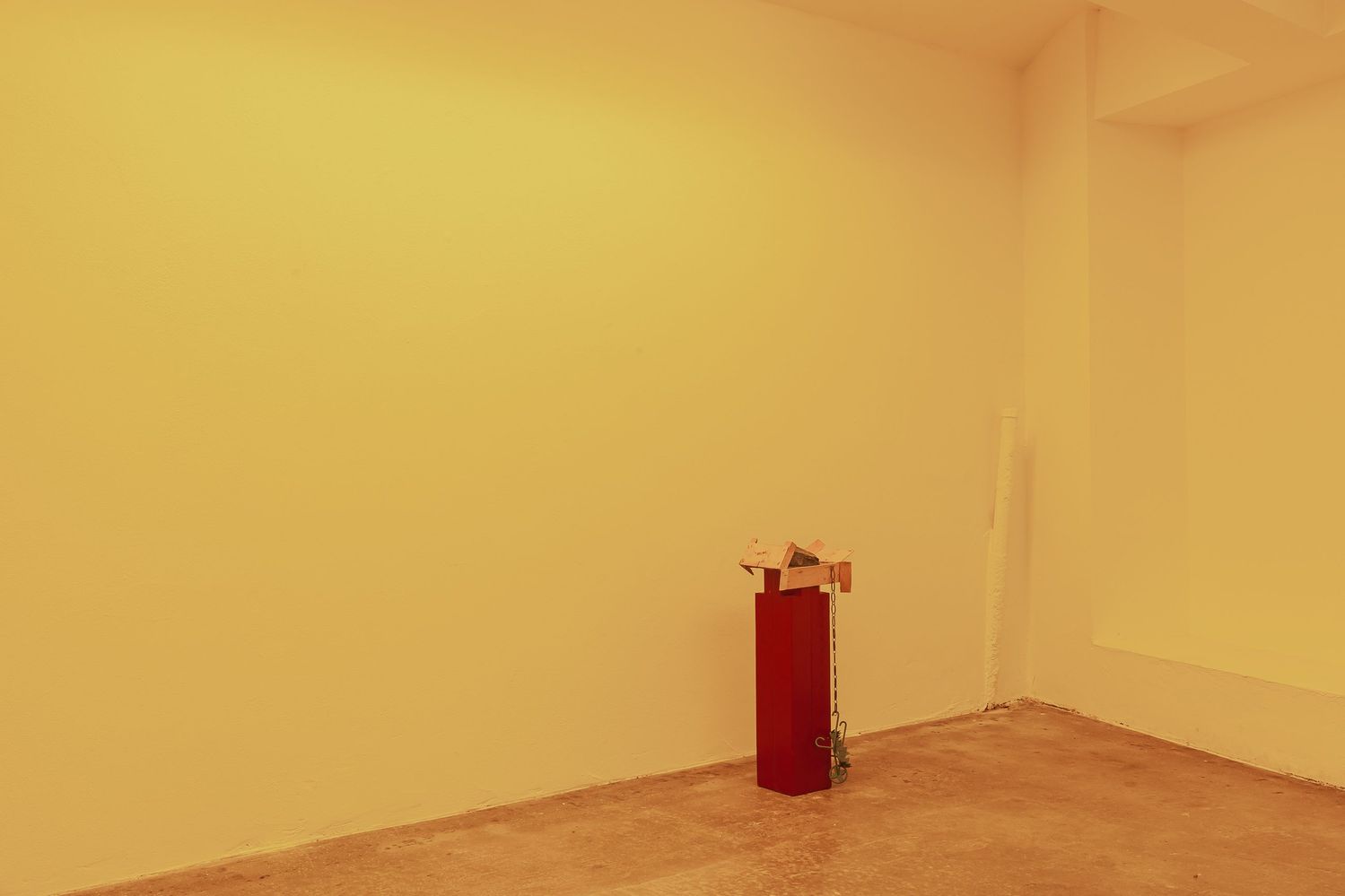
Forests grow - twisting and contorting, roots over and around obstacles, consistently seeking. Knotted branches emerging from a resilient ramulus, weathered with erosions, its atmospheric conditions contained in its circular memory. Carved by the wind and the years, every now and again their beauty is noticed. A face is seen within. An essence of something one is not quite sure of. Known as Samorost in Slavic regions, the collection of these anomalous accidents is commonplace in many cultures. Literally translated as ‘grown by itself’ the term refers to pieces of wood, normally roots, stumps, or branches, that have taken on a peculiar shape oftentimes somewhat personified in nature. These natural fragments are then extracted from their environment, lacquered and repurposed as interior ornaments. A matter of arbitrary accident that this specific piece was worth keeping, was worth extracting from the cycle of decay – at least for a time. The sculptural practice of Gleb Amankulov adopts a similar approach to materials in so far as each individual component has been found, reclaimed or borrowed and entered into an alternate contextual trajectory. Scraps of metal left to rust, textile detritus and aged furniture are gathered and carefully assembled into compositions that are created out of the laws of physics, balanced precariously together, a collection of independent memories assembled impermanently into one. The fluidity of the practice questions the permanence of the art object and exists in contradiction to the economic power structures within artistic production. The work can be looked at through the lens of Peter Osborne’s notion of the ‘post-conceptual condition’ that conceptual art’s legacy has become a baseline and that art must be understood as the combination of idea, material and context simultaneously. [1] Amankulov thus progresses from conceptual art’s dematerialization of the art object: the work does not present an idea in place of object but rather considers the conditions and context within which the objects assume the categorization of art. Throughout the exhibition there is an underlying exploration of time as a non-linear concept. The material history of the objects and their repurposing in themselves import layered fragments of past cultures, psychological associations and metaphorical interpretations. In conjunction with this, certain objects and their combinations are suggestive of contemporary political commentary that function as traces of the present. Yet along both lines of recollection, close or distant, narratives collapse in on themselves and highlight the temporary nature of structures be they physical, political or cultural. The anfractuous states of value of the objects - many of which were at one time markers of wealth or cherished items of sentiment - were then discarded as residue of lives or times no longer fully remembered, then resurrected into art, only to be dispersed again in reflection of the inherent instability of our systems, histories and perspectives. [1] Osborne, Peter, ‘The postconceptual condition: Or, the cultural logic of high capitalism’ from The Postconceptual Condition: Critical Essays, (Verso, 2018) Read more Toggle Sculpture Installation
Schedule
Starts
-
Thu, Oct 29, 2026 at 12:00 AM
Ends
-
Sat, Nov 28, 2026 at 11:59 PM
Location
Magdalenenstrasse 10/GL2, Vienna, Vienna, 1060, Austria