Exhibition
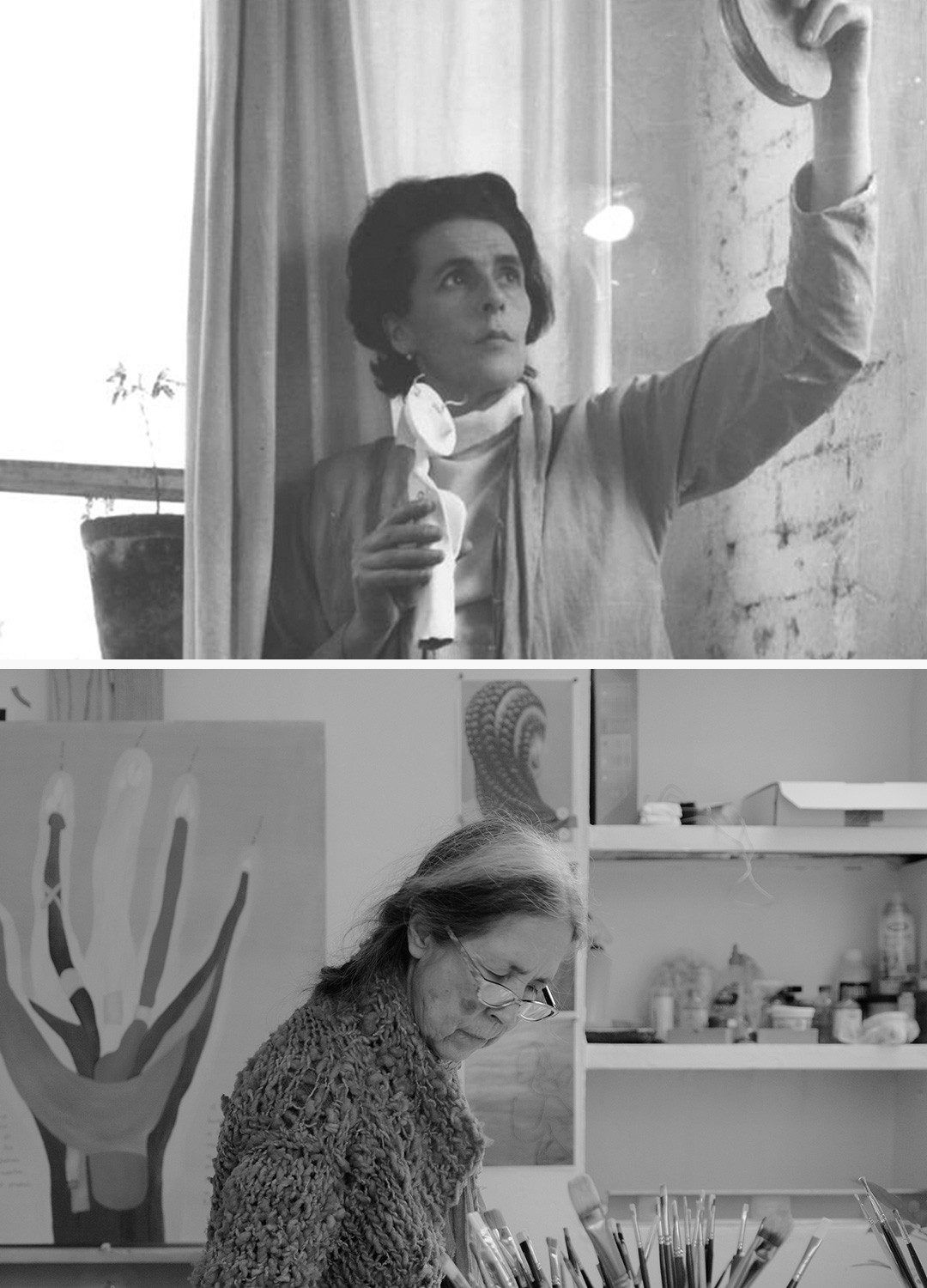
Leonora Carrington & Cecilia Vicuña
Thursday, November 19
12:00 AM - Dec 19, 11:59 PM
Lehmann Maupin
New York, United States
Checking payment status…
Registration
Registration for this event is managed on an external website.
RSVPAbout the event
Lehmann Maupin and Gallery Wendi Norris present a two-part exhibition placing the work of Leonora Carrington and Cecilia Vicuña into dialogue for the first time. About Lehmann Maupin and Gallery Wendi Norris are pleased to announce Leonora Carrington & Cecilia Vicuña, an exhibition placing the work of these two pioneering artists into dialogue for the first time. This two-part exhibition will open at Lehmann Maupin in New York on November 19, before traveling to Gallery Wendi Norris in San Francisco in January 2027. Featuring new works by Vicuña alongside historical works by Carrington, the exhibition traces a profound affinity between two artists who turn to myth, transformation, and the imagination as means of challenging fixed notions of the world and envisioning other ways of being. Their connection is also personal: Vicuña first met Carrington in 1969, an encounter that had a lasting impact on her practice and introduced her to a new method of painting. More than five decades later, this exhibition brings their practices into renewed conversation. The exhibition coincides with Cecilia Vicuña: Living Threads at Whitechapel Gallery in London, the first major UK exhibition dedicated to Vicuña's work. Though separated by geography and generation, Carrington and Vicuña share a deeply intuitive approach to the world, one that dissolves the boundaries between the human, the natural, and the imagined. Both artists draw on myth, ritual, and poetry in their work. Carrington's mythic visions and hybrid creatures inhabit a realm where the ordinary gives way to the mysterious, while Vicuña's poetic practice similarly activates overlooked materials, ancestral knowledge, and ecological consciousness to reveal unseen connections between all forms of life. Drawing on sources ranging from alchemy and gothic fairy tales to Celtic legend and Mexican folklore, Carrington built a world of her own across painting, works on paper, sculpture, tapestry, and literature. Born in Lancashire, England, in 1917, Carrington settled in Mexico City in 1942, where she lived and worked until her death in 2011. Her work has received wide institutional recognition in recent years: her children's book The Milk of Dreams gave its title to the 2022 Venice Biennale, where Vicuña's was exhibited and received the Golden Lion for Lifetime Achievement. Vicuña's engagement with Surrealism began early in her life. She recalls discovering Aldo Pellegrini's Antología de la Poesía Surrealista in 1964, an encounter she describes as formative: "I believe my poetry grew out of that encounter, of the doors it opened for me." This early exposure to Surrealist poetry opened a path toward the expansive, intuitive approach to language and imagination that would become central to Vicuña's practice. It was Carrington, however, whom Vicuña credits with introducing her to a method that allowed her to "transfer" the images she saw in her mind onto canvas. During a visit to New York around 1969, Vicuña recalls suddenly seeing, "like in a vision, the painting that I needed to do." She called the resulting approach Calcomanías, meaning "transfer." On her return journey to Chile, Vicuña spent several days with Carrington in Mexico City, and once in Chile, she re-joined her friend Coca Roccatagliata, who remained with Carrington longer and later conveyed to Vicuña the method she had learned from her. Exhibition highlights include several historical works by Carrington that will be on view in New York for the first time in decades, including Eye Witness (1987). Set in a wintry landscape against the silhouette of a city, possibly New York, where Carrington lived in 1941-42, the painting gathers hooded figures who look down or wear dark glasses, a forked stick that may be a dowsing rod, and a line of ravens, birds associated with second sight in the Celtic myths Carrington frequently drew on. A series of new paintings by Vicuña will also be on view, featuring imagery that transforms personal and political figures into dreamlike symbols. Drawing on Indigenous and Latin American visual traditions, these works continue to challenge European artistic conventions by reclaiming forms of representation shaped by colonial power. Cecilia Vicuña (b. 1948 in Santiago, Chile; lives and works in New York, NY and Santiago, Chile) integrates practices of poetry, performance, painting, sculpture, film in response to pressing concerns of the modern world, including ecological destruction, human rights, and cultural homogenization. Born and raised in Santiago, she was exiled during the early 1970s after the violent military coup against President Salvador Allende. This sense of impermanence, and a desire to preserve and pay tribute to the indigenous history and culture of Chile, have characterized her work throughout her career. While living in Chile during the mid-1960s, Vicuña began an ongoing series of small sculptures she calls precarios, spatial poems in which she combines feathers, stone, plastic, wood, wire, shells, cloth, and other human-made detritus. These tiny sculptures are often loosely fastened together with string, so the materials appear to have gathered naturally. These works are defined by their fragility and ephemerality: Vicuña initially composed the precarios along the ocean's edge, so that they would inevitably be erased by the high tide. Around the same time, Vicuña became interested in ancient quipus—an Andean method of communication and record-keeping involving the knotting of colored strings. Her first spatial weavings date from the early 1970s, and soon after she began to make her own Quipus. In the 90's she began her monumental quipu from unspun wool. These ephemeral, site-specific installations combined the tactile ritual of weaving and spinning with assemblage, poetry, and performance. Vicuña's surreal figurative paintings of the late 60's and 1970s are more explicitly personal and political in comparison to her other bodies of work, and were created in direct response to colonialism in Chile. These paintings refer to the subtly subversive images made by 16th-century indigenous artists in Latin America after the Spanish conquest, when they were forced to paint angels and saints for the Catholic church. In Vicuña's paintings, religious icons are replaced by personal, political, and literary figures, commemorated and mythologized by the artist. Read more Toggle Painting Drawing Performance / Live Art Sculpture Mixed media
Event schedule
Starts
-
Thu, Nov 19, 2026 at 12:00 AM
Ends
-
Sat, Dec 19, 2026 at 11:59 PM
Location
501 West 24th Street, New York, New York, 10011, United States