Checking payment status…
Registration
Registration for this event is managed on an external website.
RSVPAbout the event
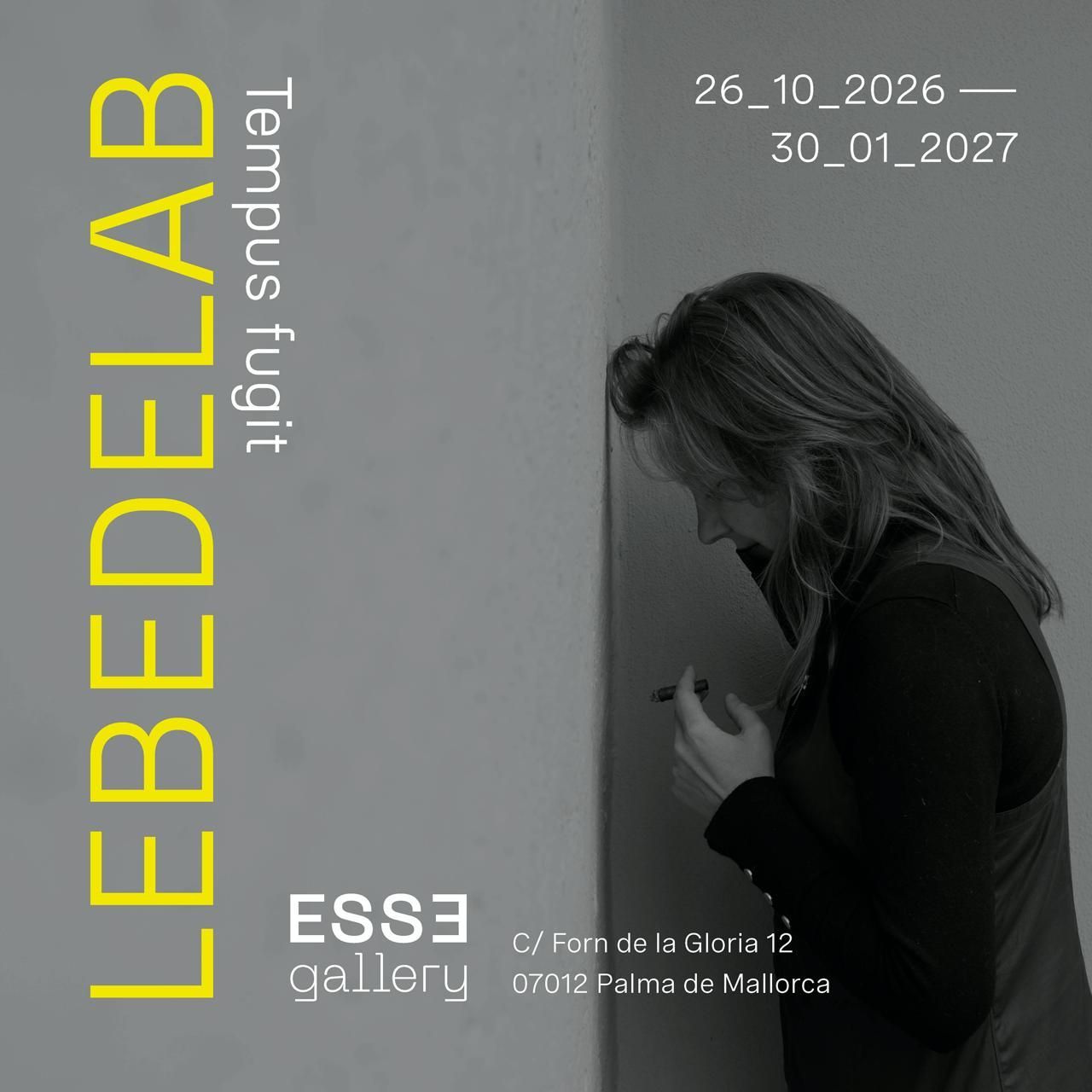
The work of Natasha Lebedelab settles in that space the myth never reached. Drawing from both still lifes and portraits, these generate a dialogue on temporalities through the tension of contrasting matter, the organic and the inorganic. About In Plato’s allegory of the cave, the cave is the space of appearances. Its prisoners see projections on the surfaces and take them for reality. The work of Natasha Lebedelab enters that territory from another direction. In Tempus fugit, time passes and accumulates, depositing itself layer upon layer as a record of what has occurred upon the flesh and what envelops it. This exhibition traces that accumulation through series that explore it from different registers. In the still life series, two temporalities coexist that the image fixes without reconciling. The fruit carries inscribed within it the limits of the biological process. The plastic that envelops it, however, responds to another scale entirely foreign to any organic measure. The baroque vanitas made that tension legible through shared signs: the skull, the spent candle, the hourglass… Here that tension remains inscribed in the matter itself. The plastic migrates from the still lifes to the portraits. The human figure, partially covered by this translucent membrane, holds the gaze with a composure that the formal portrait establishes as norm. That austere frontality determines how the body positions itself before the lens. That tradition used clothing to declare rank and belonging through its density and permanence. The plastic takes the place of clothing, but the flesh it covers persists stony, frontal, still recognisable as form. The question of time shifts then from object to body. Lebedelab’s work moves in the territory where the photographic and the pictorial blur, where time remains active within the frame. Photography seems destined to fix an instant, but her work puts that function in crisis. The body does not appear as a detained presence; what the camera registers is also in transit. Barthes’s “this has been”, that guarantee that the subject stood before the lens, ceases to function because neither the body nor its record remains intact. That instability radicalises into a more atrocious gaze, closer to the grotesque, the deformation that allows one to see what the static body cannot show. The body in movement exists simultaneously in the colour of the background, orange and blue, and in the dark mass that traverses it. Between the two there is a limbo, the interval where the body does not fully belong to either. That mass has a presence of its own, a weighted void, the place toward which the body moves and from which it emerges at the same time. Hence the layers of that transit accumulate, the movement of the flesh deposited at different moments onto the same image. This accumulation produces something akin to the shadows of the Platonic cave, although here the shadows proceed from no fixed original. They are the body itself, in the act of exceeding its own contours, touching questions that traverse existence and death to the margin where being and not being can no longer be distinguished. In the masks, the same dark mass envelops the face. Facial movement is inscribed upon the black as a rebellion. It is the resistance of the face to remaining fixed, to obeying the demand to be recognisable. The accumulated movement is the trace of when that obedience breaks, when the face revolts. Thus, the portrait ceases to be the capture of a stable presence and becomes the record of a transformation. What emerges is the transit between what we are and what we allow to be seen. The Platonic myth does not describe the return. It has devoted all its attention to the ascent, to the subject who abandons the cave to reach knowledge, to the discovery of pure forms. But it does not say what those who can no longer look at the shadows with the innocence of someone who has seen nothing see in them, what remains of the gaze when it returns to the darkness with what it already knows. Whether the thought that found the light can also reach some stillness. This exhibition inhabits the silence of that return. Ana Mariya Hambartsumyan Palma, 2026 Photography
Event schedule
Starts
-
Thu, Nov 26, 2026 at 12:00 AM
Ends
-
Sat, Jan 30, 2027 at 11:59 PM
Location
Carrer del Forn de La Gloria 12, Palma, Balearic Islands, 07012, Spain